
 Business License
Infineon’s Power Semiconductor Lab Hits Double Win — Higher Throughput & Ultra-High Precision with B
Intro: The Costly Bottleneck Plaguing Power Semiconductor Labs
Power cycling testing is non-negotiable for EV inverters, wind converters, railway drives and solar power modules. But here’s the brutal truth: power cycling test benches rank as the single biggest capital expense at Infineon’s Warstein innovation hub in Germany.
Every power module (covering currents from several amps up to 3,000 A) needs a TC temperature characteristic calibration first. This curve determines junction temperature — the core metric for all reliability tests. Years ago, Infineon relied on fully manual calibration rigs, and the pain points piled up fast:
1+ hour of manual setup per test batch
Human error risk in voltage/current logging
No overnight unattended operation
Slow furnace cooling delaying subsequent test runs
The lab team knew they needed a full automation overhaul, and Beckhoff’s open PC-based control stack became their game-changing solution.
The Automated Test Bench Stack: How TwinCAT + EtherCAT Cracked Precision Limits
1. High-Resolution Measurement Core: ELM3xxx EtherCAT Terminals
The star hardware here is the ELM3102-0100 EtherCAT measurement terminal, packing 24-bit resolution and 0.01% measurement accuracy.During calibration, up to 32 power modules sit inside temperature-controlled furnaces regulated via TCP/IP + TwinCAT. Once thermal equilibrium hits, the terminal captures module contact voltages with unmatched consistency — calibration benchmark data matched reference standard values down to six decimal places.
2. Flexible Current Control for All Module Types
Beckhoff EL2596 LED drive terminals deliver adjustable measuring current from 10 mA to 500 mA, paired with EL9560 power terminals for channel isolation.
Fine-tuning precision: ±0.1 mA via shunt resistors
Native compatibility with special low-current modules requiring just 1 mA input
Works seamlessly with diodes, IGBTs and SiC MOSFETs without lengthy reconfiguration
3. Seamless TwinCAT ↔ LabVIEW Synergy
The whole system runs on CX5140 embedded controllers, with two parallel runtime environments:
TwinCAT 3 handling real-time furnace, I/O and current control
LabVIEW Runtime for data visualization, curve calculation and lab operation
The TF3710 TwinCAT 3 Interface for LabVIEW acts as a bidirectional data bridge. Engineers retain their familiar LabVIEW workflow while accessing all high-speed EtherCAT real-time signals from TwinCAT — no compromise on either lab software convenience or industrial control performance.
Real-World Lab Gains: Numbers That Speak for Themselves
After full deployment, Infineon’s Warstein test lab saw transformative operational improvements:✅ 1 hour saved on manual setup per test cycle✅ Double daily test throughput: 2 full batches instead of 1✅ Unattended overnight testing cuts idle equipment time drastically✅ TwinCAT-controlled furnace door actuation accelerates cooling, speeding batch turnover✅ Sharp OEE (Overall Equipment Efficiency) boost for capital-heavy test hardware
For a lab that acts as an internal service provider to R&D teams, faster throughput means hitting tight prototype delivery deadlines without sacrificing test accuracy.
Collaborative Customization & Future Expansion
This project wasn’t just an off-the-shelf hardware deployment — close joint development between Infineon and Beckhoff unlocked custom performance upgrades. Even a 10x jump in control precision was rolled out via standard firmware updates, avoiding costly custom hardware redesigns. The complete control cabinet passed mandatory CE certification, a critical requirement for automotive-grade semiconductor suppliers.
The upgrade roadmap is already locked in:
Auto-pull TC curve data from a central database via module ID, eliminating manual data retrieval from power cycling benches
Deploy two more identical automated test rigs (each supporting 24 simultaneous modules), with one installed at Infineon’s Hungarian production facility
Wrap-Up: Why PC-Based Control Dominates Semiconductor Test Labs
Semiconductor reliability testing demands two conflicting priorities: lab software flexibility and ultra-stable high-precision real-time control. Traditional closed PLC systems struggle to balance both.
Beckhoff’s open PC architecture, EtherCAT high-resolution I/O and TwinCAT-LabVIEW integration erase that tradeoff. For Infineon, the upgrade delivered both lab productivity leaps and gold-standard calibration accuracy — a blueprint for power semiconductor test labs worldwide scaling EV and renewable energy component validation.
Recently Posted
-
SICK InspectorP611 Smart Camera: Automatic Laser Beam Centering Solution for Fiber Laser Cutters
July 20, 2026Industry Pain PointsFiber laser cutters are widely used in sheet metal, automotive and aerospace industries for metal plate &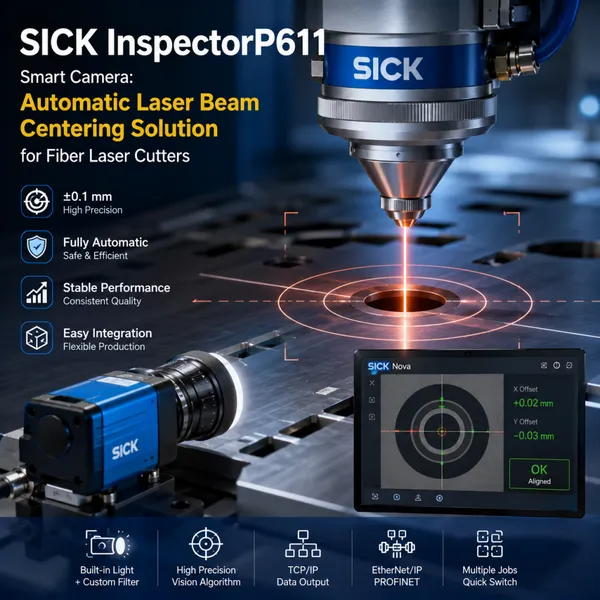 Read More
 -
New Generation SICK W12 Photoelectric Sensors Released: 37-Year Classic Gets Full Technical Upgrade
July 16, 2026IntroductionIn the industrial photoelectric detection industry, SICK W12 series is a time-tested classic. First launched in 1989,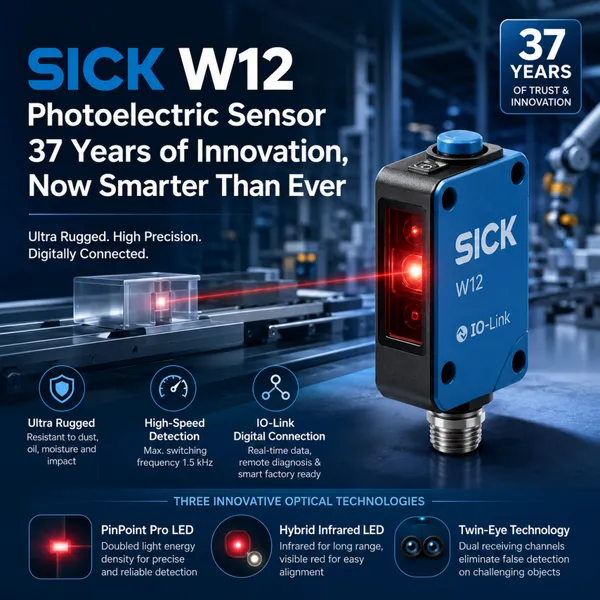 Read More
 -
SICK VMV Volume Measurement Solution: Game-Changer for Logistics Dimension Weigh Scan
July 14, 2026In modern logistics, accurate package dimension and volume measurement is the foundation of intelligent warehousing, shipping cost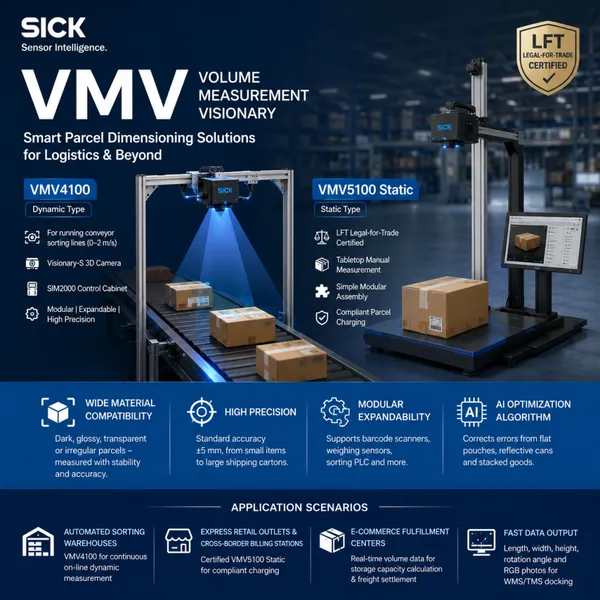 Read More
 -
Why Chemical Dosing Is Critical in Water Treatment Systems
July 10, 2026Why Chemical Dosing Is Critical in Water Treatment SystemsChemical dosing is one of the most important processes in industrial wat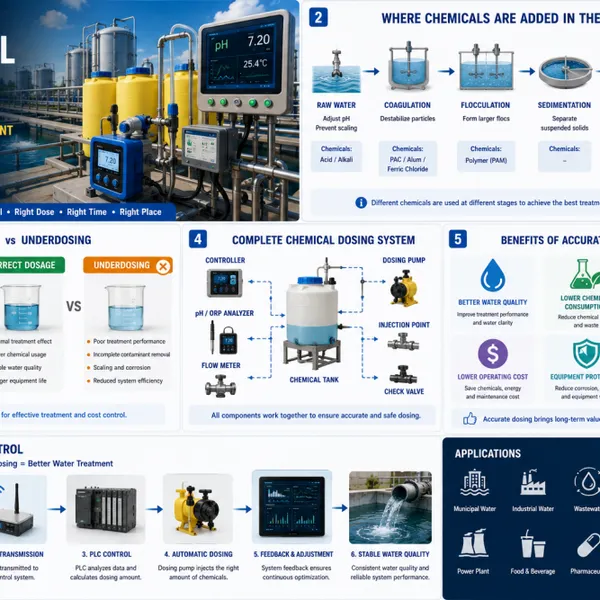 Read More

Contact Us
Recommended Products
-
 Ultrasonic Level Transmitter With Display 4-20mA HART ATEX for Water Treatment TankUS$ 330MOQ: 1 Box
 -
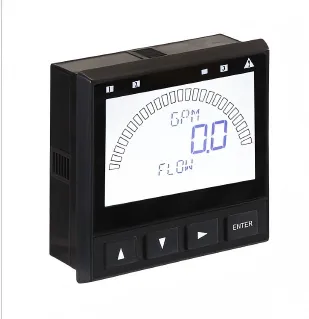
Multi-Parameter Transmitter Controller for Water Treatment Flow pH Conductivity SystemUS$ 220MOQ: 1 Box
-
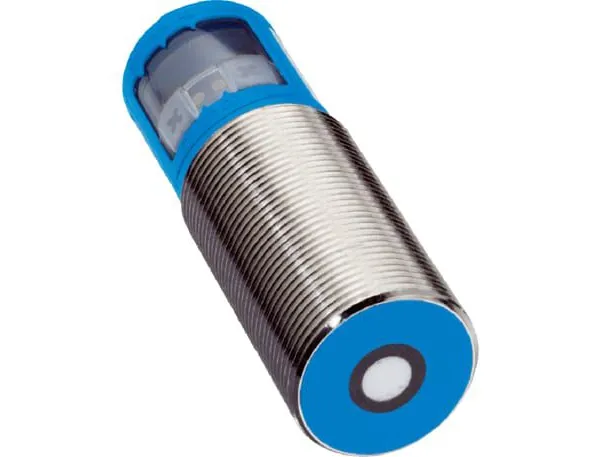
SICK UM30-212111 Ultrasonic Proximity Sensor, 60-350mm Range, PNP NC, IP67, 9-30V DC, M30 BarrelUS$ 149 - 155MOQ: 1 Unit
-
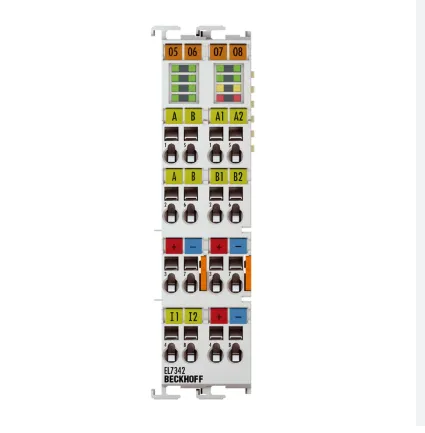
Beckhoff EL7342 EtherCAT Terminal 2-Channel DC Motor Output Stage 48V DC 3.5A Motion Control Module With Encoder InterfaceUS$ 350MOQ: 1 Piece
-
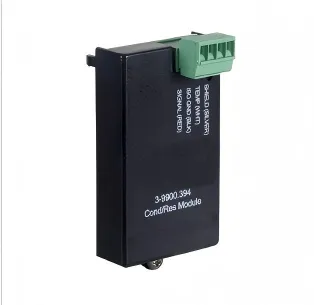
9950 Conductivity Resistivity Module Industrial Water Quality Measurement Module for 9950 Controller SystemUS$ 300MOQ: 1 Piece
-
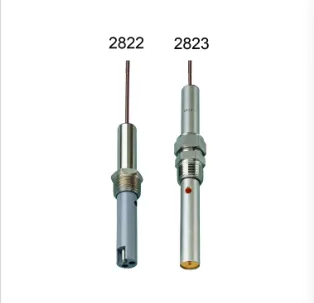
Type 2822 2823 Conductivity Sensor High Precision Conductivity Resistivity Electrode for RO and Pure Water MonitoringUS$ 350MOQ: 1 Piece
-
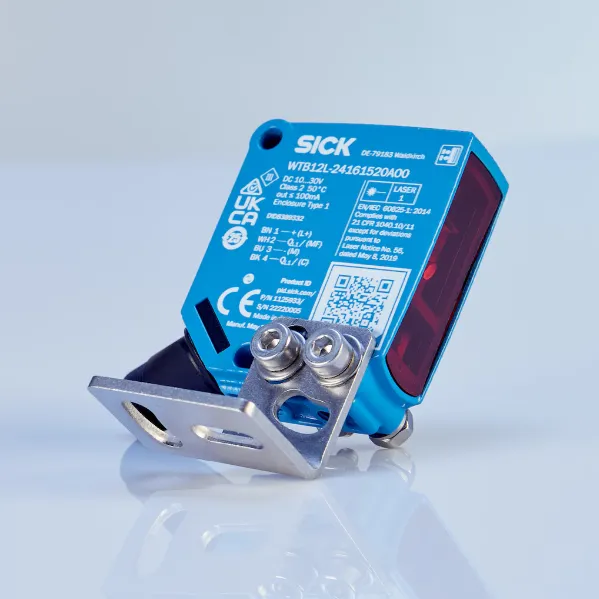
Sick W12 Series Photoelectric Sensor, Compact Industrial Diffuse/Retro-Reflective/Through-Beam Sensor, IP67, High Precision, for AutomationUS$ 231 - 263MOQ: 1 Unit
-
PVC Gauge Guard Pressure Gauge Protector for Pipeline SystemUS$ 360MOQ: 1 Piece
-
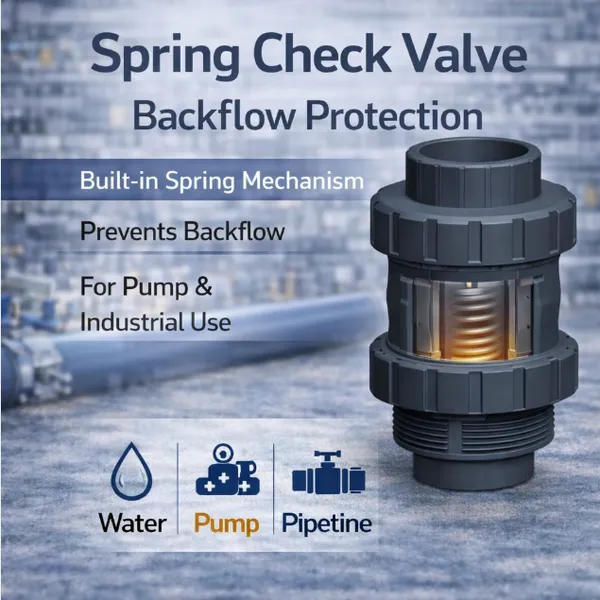
PVC Spring Check Valve BS Socket Inch Non Return Valve for Pump SystemUS$ 380MOQ: 1 Piece
-
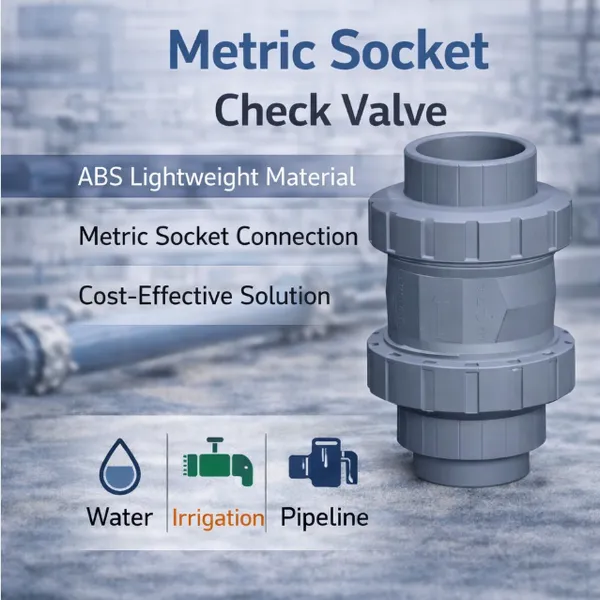
ABS Check Valve Metric Socket Non Return Valve for Water SystemUS$ 390MOQ: 1 Piece

-
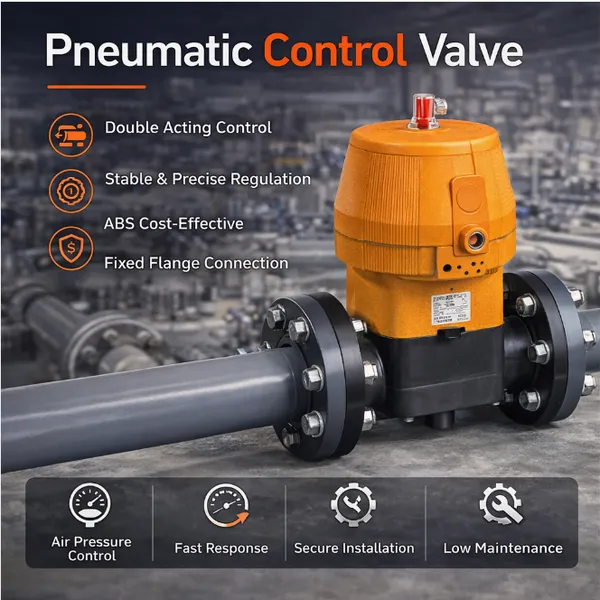
ABS Diaphragm Valve Double Acting Pneumatic ANSI Flange for Water TreatmentUS$ 360MOQ: 1 Piece
-
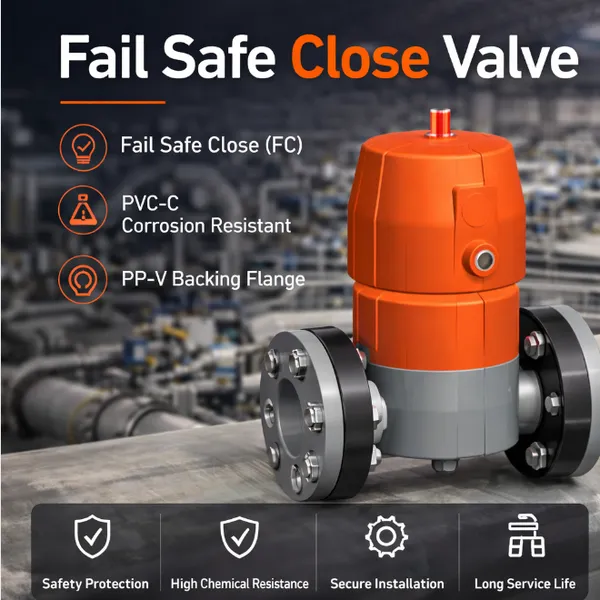
PVC-C Diaphragm Valve Fail Safe Close Backing Flange PP-V for Chemical SystemUS$ 410MOQ: 1 Piece
-
PVC Pressure Retaining Valve for Water Treatment / Chemical Pipeline Back Pressure ValveUS$ 280MOQ: 1 Piece
-
Wafer Butterfly Valve Metal PFA Lined Stainless Steel Disc Industrial Water Treatment ValveUS$ 300MOQ: 1 Piece
-
PVDF Butterfly Valve Wafer Type Chemical Resistant Industrial Water Treatment ValveUS$ 210MOQ: 1 Piece
-
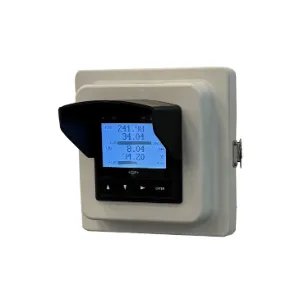
9900-1P 9950 Sun Visor Package Industrial Display Protection Cover With Sunshade for Field Mounted TransmitterUS$ 380MOQ: 1 Piece
-
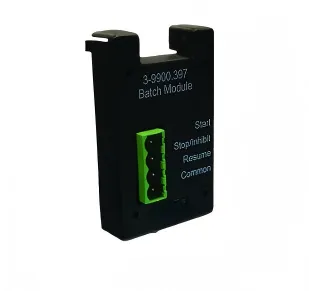
9900-1BC Batch Control Module for Water Treatment Dosing System PLC Automation IntegrationUS$ 370MOQ: 1 Piece
-
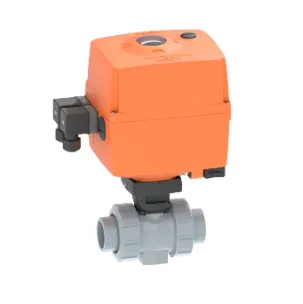
Electric Actuated Ball Valve 220V PVC-C Type 127 for Water Treatment System ASTMUS$ 420MOQ: 1 Box
-
Rosemount 3051 Pressure TransmittersUS$ 500 - 1000MOQ: 1 Piece
-
Beckhoff EL2889 EtherCAT Terminal 16-Channel Digital Output 24V DCUS$ 150MOQ: 1 Piece